Mastering the Work Cafeteria: Smart Choices, Not Calorie Traps
Reading time: 9 minutes
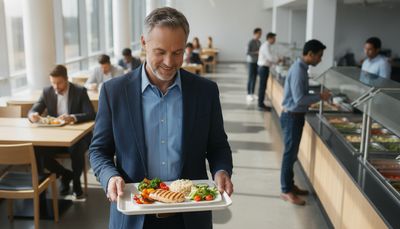
You're standing at the buffet, your coworkers are routinely grabbing fried chicken cutlets and fries, and you wonder: how am I supposed to lose weight in the cafeteria without everyone giving me funny looks? The answer is simpler than you think. The company cafeteria isn't the enemy of your weight-loss goals; it can become your ally once you know a few practical strategies.
Every day, millions of people make their lunch-break decisions in company cafeterias. According to a 2023 study by Germany's Federal Association of Contract Catering, about 7.8 million employees in German company cafeterias eat there regularly. The problem: the average cafeteria meal delivers 850 to 1,200 calories, often more than half of the daily requirement for men who want to lose weight.
The Invisible Calorie Trap at the Buffet
The cafeteria buffet is psychologically designed to get you to load up. The heartiest dishes are usually at the start, when you're hungriest. Then the peer pressure from coworkers while eating comes on top of that.
Mike, 43, an IT specialist from Charlotte, knows this all too well: "When I only grabbed a salad at lunch, the comments came right away, like 'Are you a model now?' or 'Don't you have real work to do?' Eventually I just ate along to fit in." The result: 33 more pounds in two years.
The solution isn't avoiding the cafeteria but learning to choose your cafeteria food. A 2015 Cornell University study showed that the order in which we walk along the buffet determines 65 percent of what we load onto our plate.
Strategy 1: A Walk-Through First Makes the Difference
Before you pick up a plate, walk the whole buffet once. According to University of Illinois research, this simple trick reduces impulsive decisions by 40 percent.
Pay attention to these elements:
- Where the high-protein options are, like chicken breast, fish, or legumes
- Which vegetable sides are available, not just the butter-soaked ones
- Whether there are hidden filling options like raw veggies or quark
- Where the biggest calorie traps lurk, like breaded dishes or creamy sauces
This mental preparation gives you control back. You make conscious decisions instead of automatically reaching for the fried cutlet just because it comes first.
The 50-25-25 Rule for Your Plate
Picture your plate in three zones: 50 percent vegetables or salad, 25 percent protein, 25 percent complex carbohydrates. That's not a strict diet but a practical guideline for your office lunch break.
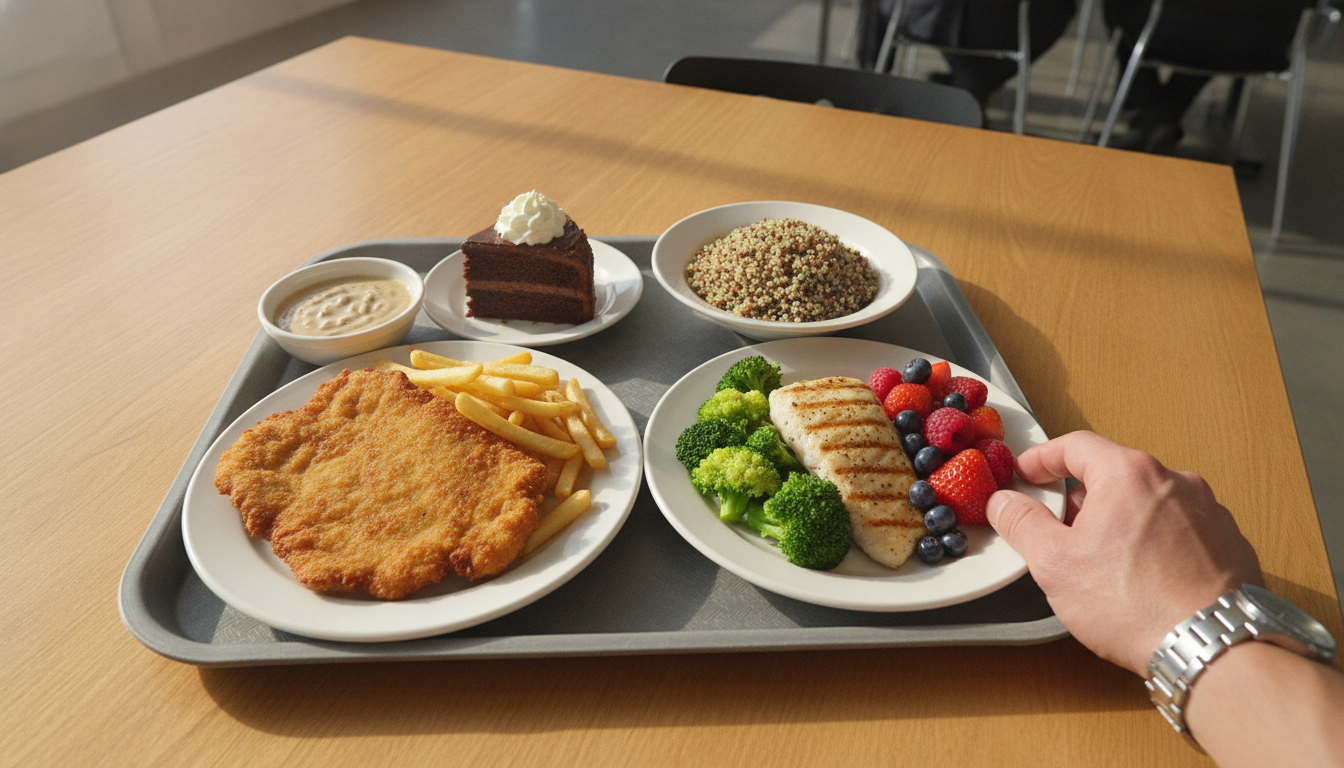
With a standard cafeteria meal, that could concretely mean: broccoli and carrots as the base, grilled turkey strips as the protein source, plus a small portion of brown rice instead of the big portion of buttered rice. This combination keeps you full until quitting time and easily saves 400 to 600 calories compared with the classic cutlet-and-fries combo.
Strategy 2: Handling Coworker Pressure With Confidence
For many men, the social aspect is a bigger hurdle than choosing the food itself. Nobody wants to be the buzzkill or the guy who's always on a diet.
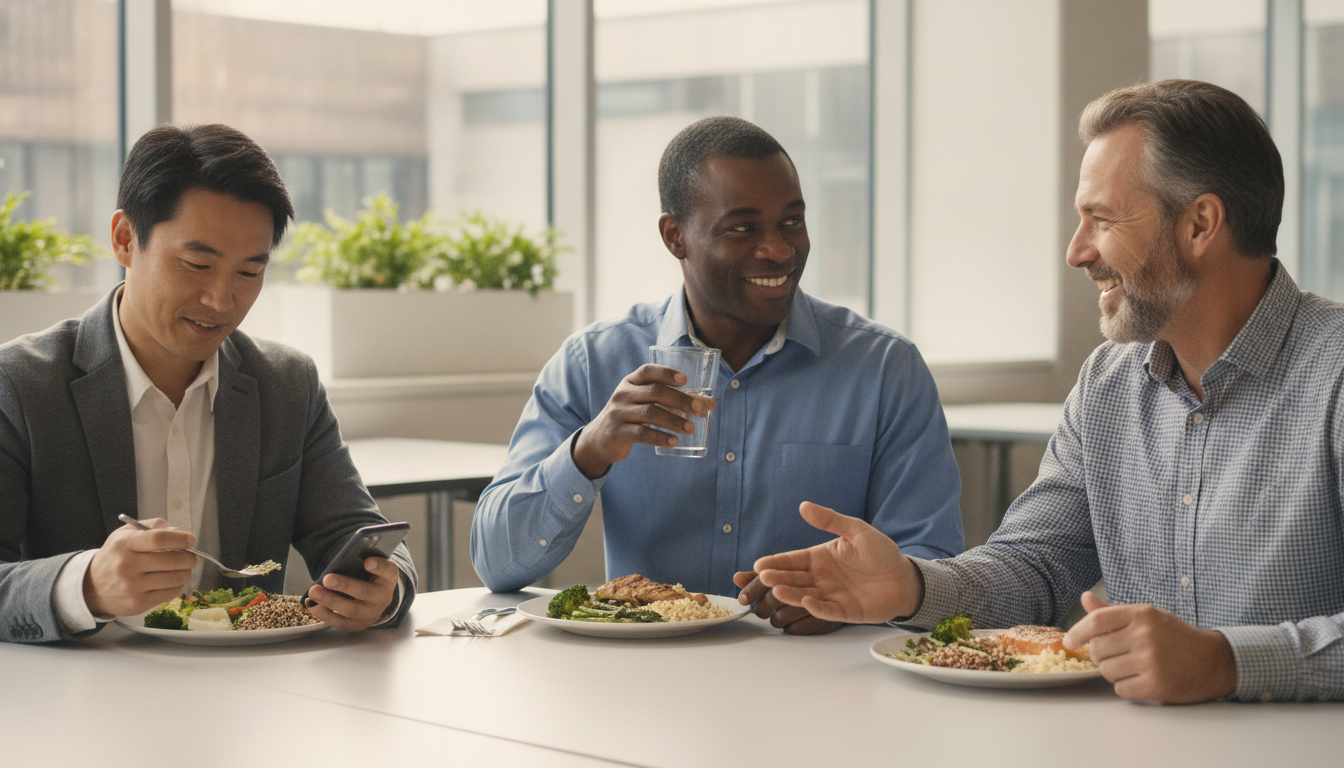
Tom, 38, a project manager from Denver, found an elegant solution: "I just say I have an important meeting in the afternoon and don't want to be sitting there in a food coma. Everyone understands that." This strategy works because it doesn't create pressure to justify yourself, and it comes across as professional at the same time.
Another proven answer: "I'm currently training for a company 5K in September." That creates a positive frame around your decisions. According to a 2022 survey by the German health insurer Techniker Krankenkasse, 78 percent of respondents respect coworkers' health-minded food choices when there's a concrete goal behind them.
Elegantly Sidestepping the Dessert Trap
On Fridays, many cafeterias serve cake or chocolate mousse. When everyone digs in and you decline, it sometimes feels like social isolation. The solution: take a small portion, savor three forkfuls mindfully, and leave the rest. Or say: "I'm saving that for tonight with my girlfriend."
These small strategies help you break the yo-yo effect, because you aren't building a radical stance of deprivation that can't be sustained long term.
Strategy 3: Spotting Hidden Calorie Bombs
The biggest calorie traps in cafeterias aren't the obvious suspects like fries. They're the supposedly healthy options that trick you.
A Caesar salad at the salad bar can easily hit 650 calories when it's served generously with dressing, croutons, and Parmesan. By comparison: a cutlet with vegetables comes in at about 550 calories if you leave half the breading off.
Critical items when choosing your cafeteria food:
Always ask for dressing on the side and use one tablespoon at most. The typical cafeteria dressing portion contains about 150 to 200 calories of pure fat. Smoothies at the drink bar sound healthy but are often sugar bombs with 250 to 350 calories per 10-ounce glass.
Breaded or fried dishes have an invisible layer of fat. A breaded cutlet absorbs about 30 to 40 grams of fat while frying, which is an extra 270 to 360 calories from the preparation alone.
Solving the Sauce Question Cleverly
Sauces often make the difference between 400 and 800 calories. In many cafeterias you can order the sauce separately. Do that. Take two tablespoons at most and mix it well into the food instead of pouring it over everything.
A 2021 study by Germany's Max Rubner Institute showed that average cafeteria sauces contain about 120 calories per 3.4 ounces (100 milliliters), mainly from cream and butter. The typical portion is 5 to 7 ounces (150 to 200 milliliters), which quickly adds up to 180 to 240 calories you don't consciously register at all.
Strategy 4: Timing and Portion Control Without Deprivation
Don't go to the cafeteria at peak time. Between 12:00 and 12:30 p.m. it's usually packed, you're under time pressure, and you make faster and often worse decisions.
If you go between 11:30 and 11:45 a.m. or after 1:00 p.m., you have more calm for conscious decisions. You can also politely ask the cafeteria staff about ingredients or preparation methods, which is impossible in the rush.
For portion size, a simple trick helps: on your first trip, take a little less than your hunger asks for. After a 15-minute break, you can still go back for seconds if you're really still hungry. In 90 percent of cases you'll find you're full.
This approach fits perfectly with the principles that also matter when losing belly fat quickly: mindful eating without stress.
Strategy 5: Your Drink Choice as a Game Changer
Many men automatically drink an apple juice spritzer, a soda, or an iced tea with their lunch break. These liquid calories add up massively. A 17-ounce (0.5 liter) glass of apple juice spritzer contains about 130 calories, an iced tea often 150 to 200 calories.
Water or unsweetened tea saves you 130 to 200 calories a day. Calculated over a year, that's 47,450 to 73,000 calories saved, which works out to roughly 13 to 22 pounds (6 to 10 kilograms) of body weight. Just from your drink choice.
If plain water is too boring for you: many cafeterias now have water dispensers with lemon slices or cucumber slices. That gives flavor without calories.
Coffee After the Meal: Friend or Foe
A black coffee after your meal has zero calories and can even boost fat burning slightly. A latte macchiato or a sweetened cappuccino, on the other hand, comes in at 150 to 250 calories.
If you don't want to give up milky coffee, order a plain cappuccino without sugar. That's about 80 calories that you can enjoy consciously instead of knocking them back unconsciously.
Practical Tip: The Meal-Prep Hybrid as a Backup
The cafeteria doesn't offer optimal options every day. On days when the main dish is a sausage-and-fries casserole, it gets hard to lose weight in the cafeteria without staying hungry.
So always have a backup plan: bring a prepared meal on two days a week. That takes the pressure off and gives you flexibility. On the other three days, you navigate the cafeteria buffet with the strategies above.
This combination also keeps you from slipping back into old patterns because you think: "Everything's unhealthy today anyway, so I might as well go all out." According to a 2020 study from the University of Hohenheim, exactly this mindset leads to failure in 67 percent of weight-loss attempts.
The Link Between Cafeteria Routine and Body Awareness
When you've got lunch in the cafeteria under control, it affects more than just the scale. You develop better body awareness because you make conscious decisions instead of being driven by habit.
You feel that not only physically through more energy in the afternoon but also mentally through a sense of self-efficacy. And that very presence makes you more attractive, whether in regular dating or in a sugar dating context, where self-assurance and a polished appearance are especially valued.
Nobody expects you to show up at 120 pounds (55 kilograms) with a six-pack. But a man who treats himself and his body mindfully radiates a composure that attracts more than any washboard-abs photo. This inner attitude comes from consistent small decisions, like the ones you make every day choosing your cafeteria food.
Frequently Asked Questions About Losing Weight in the Cafeteria
How can I lose weight in the cafeteria without coworkers noticing?
Choose plates that look full, with lots of vegetables; that looks normal. Skip the justifications and, if asked, casually mention a goal like "I want to feel fitter." After two weeks, most coworkers no longer care about what's on your plate.
What are the best cafeteria dishes for weight loss?
Grilled fish or chicken with steamed vegetables and a small portion of potatoes or brown rice. Vegetable-based stews with legumes are also good. Avoid breaded, fried, or creamy-sauced dishes. If you want to stick with it long term, also look at the basics of losing weight around the belly.
How do I deal with buffet temptations?
Make the walk-through a fixed routine. Picture your ideal plate before you reach for anything. Take less on your first trip on purpose and wait 15 minutes before going back for seconds. In most cases you'll be full by then.
How many calories should a cafeteria meal have?
For men who want to lose weight, 500 to 650 calories at lunch is a good guideline. That's about a third of the daily requirement with a moderate calorie deficit. Make sure to get enough protein (at least 30 grams) to avoid muscle loss.
What do I do if the cafeteria only offers unhealthy options?
Pick the least problematic option and optimize it. With cutlet and fries: take the cutlet, remove half the breading, eat a normal portion of fries instead of a large one, and fill up the plate with salad. On days like that, you can also bring your own food instead.
Conclusion: Your Cafeteria Is Not the Enemy but a Training Ground
The company cafeteria gives you the chance every day to make better decisions and make losing weight in the cafeteria the norm. It's not about perfection at every meal but about a solid 80-20 rule: if you apply the smart strategies on eight out of ten cafeteria visits, you'll see results.
The combination of the walk-through, mindful plate building, handling coworker pressure with confidence, and smart drink choices makes the difference between frustration and lasting success. You don't have to isolate yourself, skip social lunch breaks, or torment yourself through the afternoon feeling hungry.
Start tomorrow with the walk-through. That one small change will show you how much control you really have. And when you notice you're making self-determined decisions instead of automatically going along with the crowd, it will also affect other areas of life. Whether on your next date, in sugar dating, or simply in how you treat yourself: self-efficacy is attractive and begins at the lunch plate.